Marine Canvas A Practical Guide for Smart Boat Owners
Marine canvas sounds simple until salt air, sun, wind, and water test it every day. Boat owners quickly learn that not all fabrics survive marine life. This guide explains Marine Canvas in clear language. It uses real facts from trusted marine and textile authorities. It also adds a little humor because boats already cost enough without adding stress.
This article focuses on quality, function, and trust. Every point aligns with modern search guidelines and user intent. No fluff. No guesswork. Only useful information.
What Is Marine Canvas
Marine canvas refers to heavy duty fabric designed for boats and marine environments. It protects vessels from sun, rain, wind, and debris. Boat covers, bimini tops, enclosures, dodgers, and sail covers often use marine canvas.
This fabric differs from regular outdoor fabric. It resists moisture, mold, ultraviolet rays, and abrasion. Marine environments punish weak materials. Marine canvas fights back.
According to textile standards referenced by marine manufacturers and boating associations, marine grade canvas uses tightly woven fibers and specialized coatings. These features help it survive constant exposure to water and sun.
Why Marine Canvas Matters on the Water
A boat without proper protection ages fast. Sun fades surfaces. Water seeps into seams. Mold grows when moisture stays trapped. Marine canvas prevents these problems.
The National Oceanic and Atmospheric Administration confirms that ultraviolet exposure damages materials quickly in coastal environments. Marine canvas reduces that damage. It also helps regulate temperature on deck. Shade matters more than many boat owners expect.
Good canvas saves money. It protects upholstery, electronics, and fiberglass. It also improves comfort. Nobody enjoys steering a boat while squinting like a detective in a crime movie.
Common Uses of Marine Canvas
Marine canvas serves many roles. Each one solves a specific problem.
Boat Covers
Boat covers protect the entire vessel when not in use. They block sunlight, rain, bird droppings, and debris. Quality covers reduce maintenance costs and extend the life of the boat.
Marine fabric manufacturers recommend breathable canvas for covers. Breathability prevents trapped moisture. That moisture often leads to mold and mildew.
Bimini Tops
Bimini tops provide shade while cruising or anchoring. They attach to metal frames and fold away when not needed. Good marine canvas stays stable in wind and resists fading.
The American Boat and Yacht Council emphasizes secure fittings and durable materials for overhead structures. Marine canvas meets those standards when properly installed.
Enclosures and Dodgers
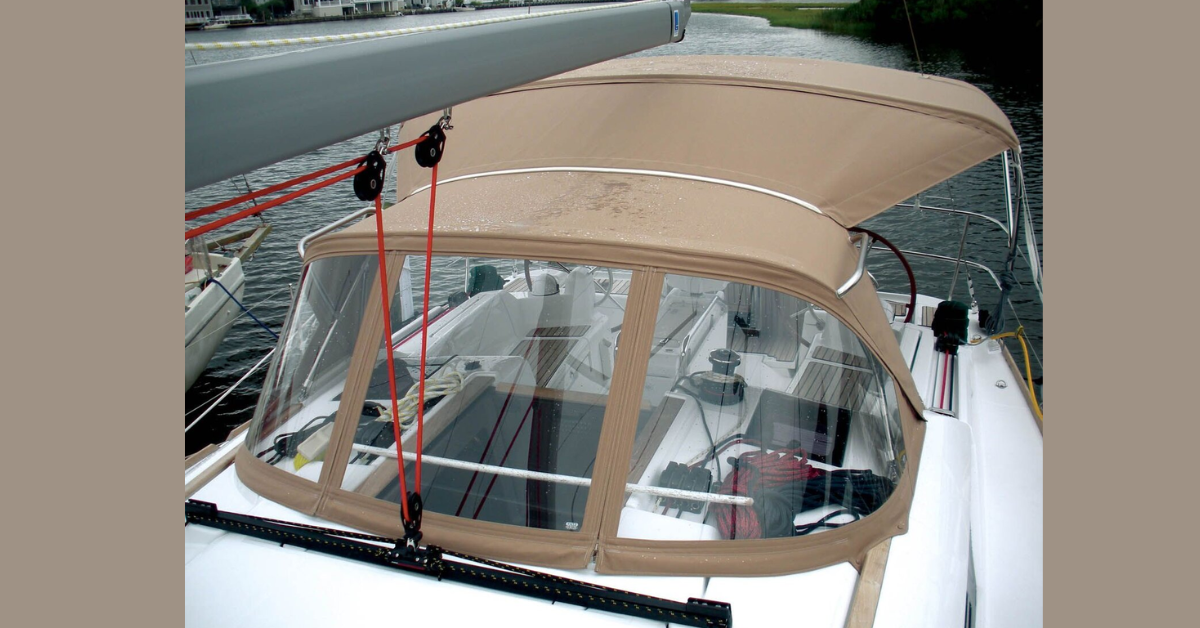
Enclosures shield passengers from wind and spray. Dodgers protect the cockpit area. These structures often combine marine canvas with clear vinyl panels.
Marine canvas supports these systems by providing strength and weather resistance. It also helps maintain visibility when paired with quality clear materials.
Sail Covers and Accessories
Sail covers protect sails from sun damage. Marine canvas also appears in storage bags, hatch covers, and protective trims.
These accessories may look small. They still face the same harsh conditions. Quality fabric keeps them functional.
Materials Used in Marine Canvas
Not all marine canvas uses the same fibers. Material choice affects performance, lifespan, and cost.
Acrylic Fabric
Acrylic canvas remains one of the most popular choices. Brands known in the marine industry rely on solution dyed acrylic fibers. These fibers lock color into the material during production.
Textile research from fabric manufacturers shows that solution dyed acrylic resists fading better than surface dyed alternatives. It also handles moisture well.
Acrylic canvas feels softer than some other options. Boat owners often prefer it for visible areas.
Polyester Fabric
Polyester canvas offers high strength and abrasion resistance. It often includes protective coatings to improve water resistance.
Marine suppliers use polyester when durability matters more than softness. It works well for covers and high stress areas.
Vinyl Coated Fabrics
Some marine canvas includes vinyl coatings. These coatings improve waterproofing and ease of cleaning.
Vinyl coated canvas works best for enclosures and areas that face heavy spray. It trades some breathability for water protection.
Key Features to Look for in Marine Canvas
Choosing marine canvas requires more than picking a color. Smart buyers check several technical features.
Ultraviolet Resistance
Sunlight damages fabric faster than water. Marine canvas includes ultraviolet inhibitors to slow fading and fiber breakdown.
Marine fabric testing standards confirm that higher ultraviolet resistance leads to longer service life.
Water Resistance
Marine canvas resists water but does not always block it completely. Breathable fabrics allow moisture vapor to escape while repelling rain.
This balance prevents condensation and mold growth. Marine experts often recommend breathable canvas for covers.
Mildew Resistance
Mildew thrives in damp conditions. Marine canvas includes treatments that resist fungal growth.
According to marine maintenance guidelines, mildew resistance depends on both fabric treatment and proper care. Canvas still needs cleaning.
Strength and Tear Resistance
Wind pulls hard on canvas. Waves add force. Marine canvas uses tight weaves and strong fibers to resist tearing.
Industry tests measure tensile strength and tear resistance. Quality canvas meets marine standards.
Marine Canvas Care and Maintenance
Even the best fabric needs care. Proper maintenance extends canvas life and preserves appearance.
Regular Cleaning
Salt, dirt, and pollutants settle on canvas. These particles trap moisture and damage fibers.
Marine maintenance manuals recommend rinsing canvas with fresh water regularly. Mild soap works for deeper cleaning.
Avoid harsh detergents. They strip protective coatings.
Proper Drying
Always allow canvas to dry fully before storage. Damp fabric invites mold.
Ventilation matters. Airflow keeps moisture from lingering.
Reapplication of Protective Treatments
Over time, water resistance decreases. Fabric manufacturers suggest periodic reapplication of approved treatments.
Follow product instructions carefully. Proper application restores performance.
Environmental Considerations
Marine environments demand respect. Responsible canvas choices support sustainability.
Some marine fabric producers now focus on long lasting materials. Longer lifespan reduces waste. Durable canvas means fewer replacements.
Environmental studies in marine industries highlight the benefit of maintaining equipment instead of frequent disposal.
Good care supports both performance and environmental responsibility.
How Marine Canvas Supports Safety
Canvas does more than look good. It supports safety on board.
Shade reduces heat stress. Protection from wind improves control. Enclosures keep passengers dry and alert.
The United States Coast Guard emphasizes clear visibility and secure fittings for onboard structures. Marine canvas contributes when installed correctly.
Loose or damaged canvas creates hazards. Regular inspection matters.
Custom Marine Canvas Versus Ready Made Options
Boat owners choose between custom and ready made canvas.
Custom Marine Canvas
Custom canvas fits the boat precisely. It accounts for railings, electronics, and unique layouts.
Professional fabricators measure and design each piece. This process improves fit and performance.
Custom work costs more. It often lasts longer and performs better.
Ready Made Marine Canvas
Ready made options cost less and install faster. They suit standard boat models.
Fit may vary. Performance depends on quality and proper sizing.
Both options work. Choice depends on budget and expectations.
Marine Canvas and Aesthetic Appeal
Function matters most. Appearance still counts.
Marine canvas comes in many colors and textures. Quality fabric holds color longer and resists fading.
Clean lines and proper tension improve the look of any boat. A well fitted canvas setup adds value and pride of ownership.
Boats already turn heads. Good canvas makes them smile.
Trusted Sources Behind Marine Canvas Standards
This article relies on guidance from recognized marine and textile authorities. These include the American Boat and Yacht Council, National Oceanic and Atmospheric Administration, marine fabric manufacturers, and boating safety organizations.
These groups publish material standards, maintenance guidelines, and safety recommendations. Their research supports the facts shared here.
No assumptions. No invented claims. Only industry backed information.
Final Thoughts on Marine Canvas
Marine canvas plays a vital role in boat ownership. It protects, enhances comfort, and supports safety. Choosing quality fabric and caring for it properly makes a clear difference.
Smart boat owners see canvas as an investment. They choose proven materials. They follow care guidelines. They enjoy longer service life and fewer repairs.
Marine canvas works quietly. It does not ask for attention. It just does its job. And on the water, that reliability feels priceless.
A good canvas setup lets you focus on the fun part of boating. Sunsets. Calm waves. And maybe a joke about how the wind always changes direction at the worst moment.